I spent 20 years on the dieting merry-go-round.
Low-fat.
Low-carb.
Juice cleanses.
Points.
Shakes.
“Starting Monday.”
You name it.
I blamed the food. The scale. My lack of willpower. Every bite that didn’t fit the plan.
But here’s what took me far too long to understand:
My stress was changing the way my body handled food.
And that was only the beginning.
Because chronic stress does not just make you feel tired, tense, or overwhelmed. It can keep stress hormones switched on long after the emergency has passed. Over time, that may affect blood sugar, insulin sensitivity, belly fat, muscle, sleep, and brain health.
Diet matters. Of course it does.
But if stress is running the show, even your best nutrition plan can feel like pushing a boulder uphill.
Cortisol is useful, until the alarm never shuts off
Cortisol gets a bad reputation. It shouldn’t.
I need cortisol in the morning. I need it when I face a challenge. It helps release energy so I can respond quickly.
That is the short-term version.
The problem is the chronic version.
Work pressure. Money worries. Caregiving. Relationship strain. Loneliness. Poor sleep. Constant notifications. Never-ending deadlines.
Again.
Again.
Again.
Your body keeps hearing: Danger. Prepare. Survive.
The result is not always “high cortisol” all day. Chronic stress can create a poorly timed or disrupted cortisol rhythm, too much at the wrong time, too little when you need it, or a sluggish decline toward bedtime.
That pattern matters.
A 2025 study using data from 531 adults in the Midlife in the United States study found that stress hormones were associated with biological aging markers, including genes involved in DNA damage response and inflammatory signaling. The strongest links in that study involved norepinephrine and epinephrine, which work alongside cortisol in the stress response. The researchers called the findings preliminary, but they add to a growing body of evidence connecting long-term stress biology with aging-related processes. Read the study in Brain, Behavior, and Immunity.
Stress is not “all in your head.”
It gets into your sleep. Your appetite. Your muscles. Your blood sugar. Your choices.
1. Cortisol can push blood sugar higher
When your body senses danger, cortisol helps put fuel into your bloodstream.
That makes sense if you are running from something.
It makes less sense when the “something” is an inbox.
Cortisol encourages the liver to release more glucose. It also makes muscle and fat cells less responsive to insulin. In plain English, your body may have a harder time moving sugar out of your blood and into your cells.
Over time, repeated stress responses can contribute to insulin resistance.
That matters if you are worried about prediabetes or Type 2 Diabetes.
It also explains why stress can make you feel:
- Wired.
- Hungry.
- Tired.
- Cranky.
- Craving something sweet.
- Ready to eat an entire pantry at 10 p.m.
This is not an excuse. It is context.
There is a difference.
If your blood sugar is consistently elevated, or you have symptoms of diabetes, talk with a qualified health professional. Do not try to manage a medical condition with breathing exercises alone. An A1C test and appropriate medical guidance matter.
2. Stress can encourage belly fat
I used to think belly fat was simply the result of eating too much.
Sometimes it is. But the story is bigger than calories.
Chronic stress can affect appetite, sleep, movement, and how the body stores energy. Research discussed by psychologist Elissa Epel and colleagues has linked high stress with greater abdominal fat, especially when stress is paired with frequent comfort-food eating.
Belly fat is not just a cosmetic issue. Visceral fat, the fat stored around internal organs, is metabolically active. It can release inflammatory signals and is associated with higher cardiometabolic risk.
The cycle can look like this:
Stress.
Poor sleep.
More cravings.
Less movement.
Higher blood sugar.
More belly fat.
More stress.
Round and round.
That is the merry-go-round I know too well.
The fix is not another punishment diet. It is a pattern of habits that makes your body feel safer and more supported.
3. Cortisol can work against your muscles
Cortisol is a catabolic hormone. That means it helps break down stored fuel when your body needs energy.
In the short term, useful.
When the stress response stays active, the body can also break down more protein in muscle to provide building blocks for glucose production.
Add in inactivity. Poor sleep. Aging. Aggressive calorie restriction.
Now muscle loss becomes easier.
That is a bad trade.
Muscle helps with strength, balance, daily function, and glucose management. It gives blood sugar somewhere to go. It helps keep you independent as you age.
This is one reason I no longer believe “eat less and move more” tells the whole story. What you eat matters. How you train matters. How you recover matters.
Longevity is not just about weighing less.
It is about keeping more of what helps you live well.
4. Stress and sleep create a vicious cycle
Stress keeps me alert.
Cortisol should generally be higher earlier in the day and lower as bedtime approaches. But chronic stress, irregular schedules, alcohol, late-night screens, and worry can interfere with that wind-down process.
Then sleep suffers.
And poor sleep makes stress harder to handle the next day.
Again.
Again.
Again.
The effects can pile up:
- More hunger.
- Less patience.
- More cravings.
- Lower motivation.
- Worse blood sugar control.
- Less recovery from exercise.
A previous study in older adults found that even partial sleep deprivation activated biological pathways related to DNA damage and inflammatory signaling. That is one reason I treat sleep as a health habit, not a luxury I earn after everything else is finished.
It is never finished.
So I protect it anyway.
You can also revisit our guide on why sleep matters for your health habits and our recent breakdown of how sleep deprivation can sabotage health more than sugar.
5. Chronic stress can age the brain
The brain is not separate from the body.
Long-term stress can affect the hippocampus, which plays a major role in memory. It can interfere with the prefrontal cortex, which helps with planning and self-control. It can also keep the amygdala, the brain’s threat center, more reactive.
That combination feels familiar.
Forgetfulness.
Brain fog.
Short fuse.
Harder decisions.
Standing in the kitchen, staring into the refrigerator, wondering what I came in there for.
Research links chronic stress and cortisol dysregulation with changes in cognitive function and brain structures involved in memory. That does not mean every stressful season causes dementia. It does mean stress deserves a place in the brain-health conversation.
So does food.
So does movement.
So does sleep.
So do relationships.
Health is not one lever.

The practical fix: lower the load without chasing perfection
I do not “eliminate stress.” Nobody does.
I work on helping my body come down from the alarm.
Here are the health habits that give me the best return.
Breathe before you react
Try five minutes of slow breathing.
Inhale gently through your nose.
Exhale a little longer.
Repeat.
You can also try cyclic sighing: take one inhale, add a second smaller inhale to fill the lungs, then release a long, slow exhale. A Stanford-led randomized trial found that five minutes of structured breathing improved mood and reduced physiological arousal compared with a mindfulness control.
Read more about the study from Stanford Medicine.
Not magic.
A reset button.
Move your body, especially your muscles
Walk after meals.
Take the stairs.
Stretch between meetings.
Lift weights two or three times per week if your health allows.
Start small. Ten minutes counts. A short walk is still movement. A few strength exercises are still a signal to your body: keep this muscle.
Movement can help with mood, insulin sensitivity, sleep, and stress regulation. It does not need to be punishment for eating.
That old mindset never helped me.
Give sleep a protected window
Keep a fairly regular sleep and wake time.
Dim the lights at night.
Stop treating your phone like a second bedroom.
Avoid using alcohol as a sleep strategy. It may make you drowsy, but it can interfere with sleep quality.
Aim for consistency, not perfection. One rough night does not ruin your health. A chronic pattern deserves attention.
Eat to support your nervous system
This is where sustainable diet, not restrictive dieting, comes in.
Build meals around real food:
- Beans.
- Vegetables.
- Berries.
- Nuts and seeds.
- Whole grains that work for you.
- Eggs.
- Fish such as wild salmon.
- Plain yogurt or other nutrient-dense proteins.
- Water instead of sugary drinks.
You do not need to overhaul your entire kitchen tonight.
Start with one swap.
One meal.
One repeatable choice.
A nourishing diet can support your brain and body. But it should not become another source of fear. If you are white-knuckling every meal, the plan may be too restrictive to last.
Stay connected
Call someone.
Eat with someone.
Join a walking group.
Ask for help before you are completely depleted.
The research on stress and aging repeatedly points to social connection as an important buffer. A strong support system does not erase hardship. It can make hardship less biologically overwhelming.
Set one boundary
No work email after a certain hour.
No automatic yes.
No explaining yourself for twenty minutes when “I can’t take that on right now” is enough.
Boundaries are not selfish.
They are maintenance.
This is not another diet
I spent two decades believing the next diet would save me.
It didn’t.
The better approach has been less dramatic. More ordinary. More repeatable.
Eat mostly real food.
Reduce added sugar and ultra-processed foods.
Protect sleep.
Build muscle.
Walk.
Breathe.
Call a friend.
Say no sometimes.
Check your blood sugar when appropriate.
Keep going when the scale refuses to cooperate.
That is the work.
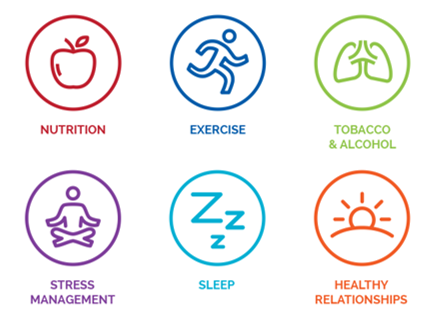
Stress is part of your lifestyle health impact. So are your meals, sleep, movement, relationships, and daily environment. They all talk to each other.
You do not have to fix everything today.
Start with the next five minutes.
One slow breath.
One glass of water.
One walk.
One honest boundary.
One meal that feeds you instead of punishing you.
That is how I finally stepped off the merry-go-round.
Not perfectly.
But permanently enough to keep moving toward better health, better brain function, stronger muscles, and a longer, more capable life.
Important note: This article is for education and is not medical advice. Chronic stress, persistent fatigue, sleep problems, anxiety, depression, high blood sugar, or unexplained weight changes deserve professional evaluation. Do not stop prescribed medications or replace medical treatment with lifestyle practices.
Sources and further reading
- Lifetime Chronic Stress Exposures, Stress Hormones, and Biological Aging: MIDUS Study
- American Psychological Association: How Chronic Stress Is Harming Our DNA
- Stanford Medicine: Cyclic Sighing and Stress Reduction
- 20 Years Dieting: Lifestyle Stress
- 20 Years Dieting: Everyday Strategies for Better Health
- American Diabetes Association Type 2 Diabetes Risk Test